
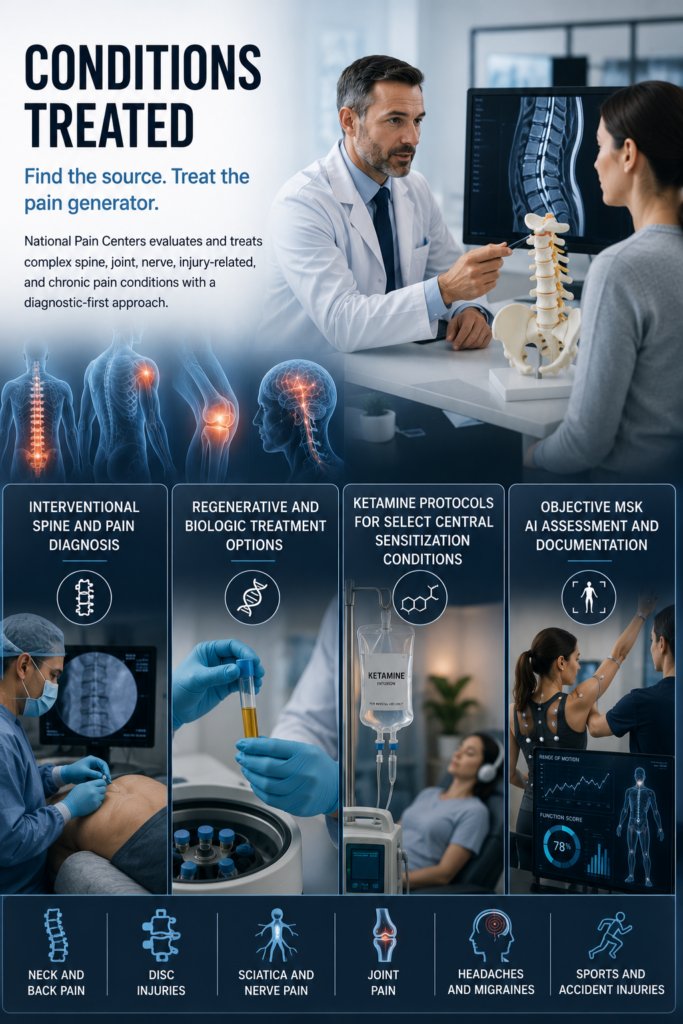
Conditions Treated
Find the source. Treat the pain generator.
- Interventional spine and pain diagnosis
- Regenerative and biologic treatment options
- Ketamine protocols for select central sensitization conditions
- Objective MSK AI assessment and documentation
Common conditions we treat.
01
Auto Accident Injuries
Whiplash, disc injury, soft tissue trauma, headaches, and post-accident pain sensitization.
02
Cancer Pain
Compassionate, expert interventional pain care for patients during and after cancer treatment — with dignity, and without defaulting to opioids.
03
CRPS / RSD
Complex regional pain syndrome requiring advanced diagnosis and multimodal treatment planning.
04
Fibromyalgia
Widespread pain, fatigue, sleep disruption, and central sensitization patterns.
05
Headaches & Migraines
Cervicogenic headache, occipital neuralgia, migraine-related pain, and post-traumatic headaches.
06
Joint Pain
Shoulder, hip, knee, ankle, elbow, and wrist pain with regenerative and interventional options.
07
Low Back Pain
Lumbar spine pain, disc herniation, stenosis, sciatica, facet pain, and sacroiliac dysfunction.
08
Neck Pain
Cervical spine pain, disc injury, facet pain, radiculopathy, whiplash, and nerve irritation.
09
Neuropathic Pain
Burning, electric, stabbing pain from damaged or dysfunctional nerves — with treatments aimed at the nerve, not the symptom.
10
Regenerative Candidates
Tendon, ligament, joint, and soft tissue conditions that may benefit from biologic repair strategies.
11
Sciatica
Sciatica is a symptom, not a diagnosis. The real question is what’s compressing or irritating the nerve
12
Work Injuries
Occupational spine and joint injuries requiring diagnosis, treatment, and return-to-work planning.
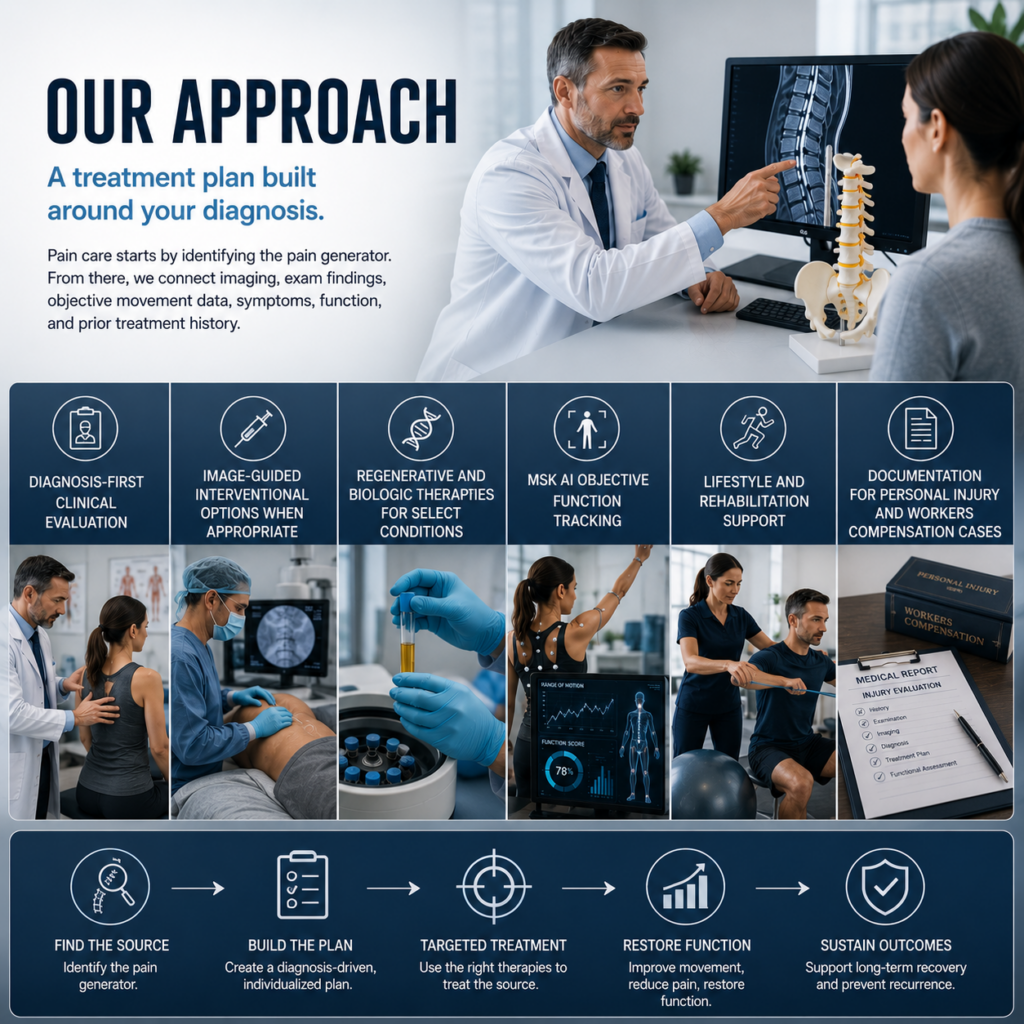
A treatment plan built around your diagnosis.
- Diagnosis-first clinical evaluation
- Image-guided interventional options when appropriate
- Regenerative and biologic therapies for select conditions
- MSK AI objective function tracking
- Lifestyle and rehabilitation support
- Documentation for personal injury and workers compensation cases
Appointments & Contact